Indstillinger
 Hurtig levering
 Gratis levering
 Incoterms
 Betalingstyper


 Markedspladsprodukt


The Basics of Choosing a Multimeter
Multimeters are a necessary tool for anyone working with electronics. Depending on the meter purchased, they measure values like voltage, current, resistance, temperature, and more. These are an all-in-one tool for troubleshooting, circuit building, and testing.
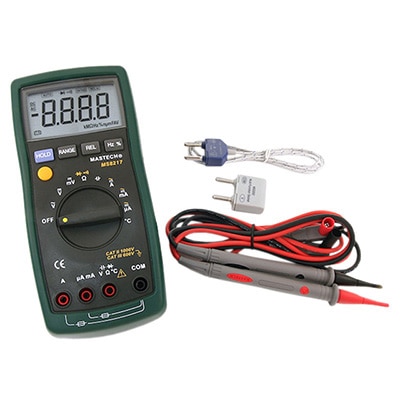 (Image source: Digilent, Inc.)
The first factor a buyer should consider is what the meter will be used for. As I mentioned, what they test is totally dependent on which meter is purchased. Knowing what it will be used for will also help to decipher the type/size to buy. There are large desktop units, to pocket sized and many variants in between.
The next consideration should be whether your application will require manual-ranging, or whether auto-ranging is acceptable. They function just as they sound. Auto-ranging automatically selects the correct range for the test being conducted (i.e. amps, milliamps, microamps, etc.) and manual-ranging requires the user to adjust the range for a more accurate reading of the test.
Ok, so why wouldn’t you just purchase auto-ranging? While their accuracy is very high, manual-ranging multimeters allow the user to fine tune the reading to more decimal points when necessary. For many applications that wouldn’t be required, but when it is, then a manual-ranging meter is the right tool for the job. If this won’t be a common need for the user, some auto-ranging meters have manual-ranging features, so that could be a good solution as well.
Some will only measure one type of value, while others measure six or more. There is a meter to fit every need. For those just starting out and unsure what to get, I would recommend something that measures voltage, current, and resistance for sure and one that has a continuity test function.
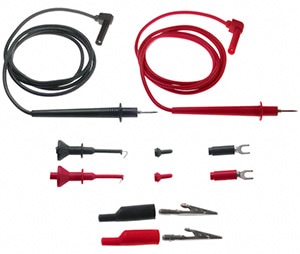 (Image source: Mueller Electric Co)
Now that I’ve covered the meters, let me go over some of the probe options. Most meters come with at least one set of probes, some come with more. The most common is the test probe. These have a fine point on the end allowing you to “probe” them into tight places within circuits for testing or through wire insulation. Although these are the probes most commonly provided with meters, there are many other types, and each has their own best use depending on application. Some other types are:
- Grabber/Hooks
- Alligator Clips
- Spade Lugs
- Tweezer Leads
There are many variants that I have not listed along with multiple size options of each. One thing to note is that if a meter can measure temperature, it will require a special temperature probe.
These powerful tools are a necessity for all labs/Makerspaces. They will save you hours of frustration troubleshooting circuits and could even save you money in the right circumstances.
Om denne forfatter

Ashley Awalt er en teknisk udvikler, der har været hos DigiKey siden 2011. Hun fik sin Associate of Applied Science-grad i elektronikteknologi og automatiserede systemer fra Northland Community & Technical College gennem DigiKey-stipendiprogrammet. Hendes nuværende rolle er at hjælpe med at skabe unikke tekniske projekter, dokumentere processen og i sidste ende deltage i produktionen af video-mediedækning til projekterne. På hendes fritid kan Ashley lide at – Nåh nej, vent, er der sådan noget som fritid, når du er mor?

Have questions or comments? Continue the conversation on TechForum, DigiKey's online community and technical resource.
Visit TechForumRelaterede blogs
Flere blogs fra denne forfatter